Personal Loans, Credit Cards, BNPL — Which Debt Should You Settle First?

Debt rarely becomes overwhelming all at once.
For most borrowers, financial pressure builds gradually — one personal loan EMI, one overdue credit card bill, one Buy Now Pay Later (BNPL) payment at a time. What begins as manageable borrowing can quickly turn into a repayment maze where multiple lenders, rising interest rates, and constant due dates create confusion about where to focus first.
According to the Reserve Bank of India’s Financial Stability Report, household debt in India rose to 42% of GDP by the end of 2024, with non-housing retail loans — including personal loans, credit cards, and app-based lending — accounting for 54.9% of household debt. At the consumer level, YouGov’s India Debt, Savings & Investment Report 2026 found that 52% of urban Indians currently carry debt, while 30% say it is hard to manage or completely overwhelming. Even more concerning, 15% are borrowing simply to cover everyday essentials.
When debt stress rises, one of the most common questions borrowers ask is:
If I cannot manage everything at once, which debt should I settle first?
The answer is not always emotional — it is strategic.
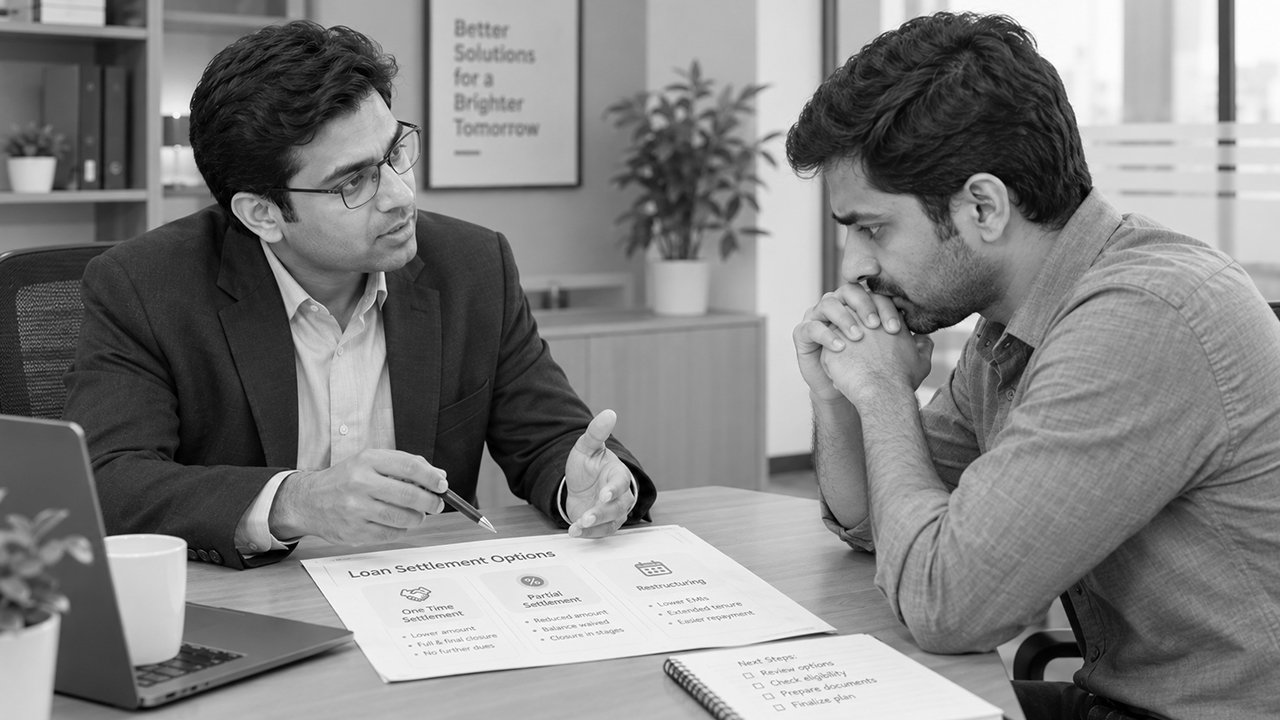
For individuals considering loan settlement, settlement of personal loan, or broader debt relief, prioritising the right debt first can reduce financial damage, minimise legal pressure, and improve long-term recovery.
Why Debt Prioritisation Matters More Than Most Borrowers Realise
Not all debt carries the same urgency.
Some debts damage your finances quietly through compounding interest. Others escalate quickly through penalties, harassment, or legal notices.
Understanding which liabilities to address first can help reduce both financial and psychological pressure.
Key factors that determine settlement priority:
- Interest rate severity
- Penalty structures
- Collection intensity
- Credit score damage
- Legal escalation risk
- Monthly cash flow burden
The goal is not simply repayment — it is strategic debt control.
For borrowers already under pressure, this is where structured loan settlement planning can become essential.
Credit Cards: Often the First Debt You Should Review for Settlement
Credit card debt is frequently one of the most dangerous forms of unsecured borrowing because of its unusually high interest rates.
Why credit cards often rank first:
- Interest rates often range from 36%–42% annually
- Minimum payments mostly cover interest, not principal
- Late fees compound rapidly
- Credit utilisation heavily impacts CIBIL score
- Revolving balances can spiral for years
If your credit card debt is growing despite regular payments, it may be the most urgent candidate for structured settlement.
Personal Loans: High EMI Pressure, But Different Settlement Considerations
A settlement of personal loan may become necessary when fixed monthly EMIs are consuming unsustainable portions of income.
Unlike revolving credit card debt, personal loans usually have:
- Fixed EMI obligations
- Defined repayment schedules
- Lower interest than credit cards (in many cases)
- Greater immediate default consequences if EMIs are missed
Prioritise personal loan settlement sooner if:
- EMIs exceed 40–50% of income
- Multiple personal loans overlap
- Income disruption has occurred
- Recovery pressure has begun
- You are borrowing elsewhere to pay EMIs
Settlement of personal loan becomes especially important when EMI burden — not just interest — is destabilising daily life.
Buy Now Pay Later (BNPL): Smallest Debt, Biggest Psychological Trap?
BNPL often feels harmless because payments are smaller.
But this can be misleading.
BNPL risks:
- Multiple fragmented due dates
- Auto-debit penalties
- Easy overuse
- App-based recovery pressure
- Hidden cumulative obligations
BNPL debt may not always be the largest, but it can quietly worsen repayment chaos.
If BNPL repayments are causing missed payments elsewhere, they should be reviewed quickly — especially when multiple apps are involved.
So, Which Debt Should You Settle First? A Strategic Order
In many cases, this framework works best:
1. Credit Cards (highest interest, fastest compounding)
2. BNPL / App-based loans (fragmentation + penalty cycles)
3. Personal Loans (especially if EMI burden is unsustainable)
Exception:
If your personal loan default risk is creating immediate legal or lender escalation, settlement of personal loan may need to move ahead faster.
The right answer depends on financial pressure, not just loan type.
Signs You May Need Professional Loan Settlement Support
You may need structured intervention if:
- You are paying only minimum dues
- EMIs exceed half your salary
- You have missed payments recently
- Recovery agents are harassing with calls, visit and legal notices
- You are borrowing to repay debt
- Your CIBIL score is dropping
- You feel unsure which debt to prioritise
When debt prioritisation becomes confusing, inaction often becomes the most expensive choice.
Case Study: When 13 Loans Became Financial Chaos — How Strategic Loan Settlement Helped
For borrowers juggling personal loans, credit cards, and fragmented liabilities, repayment confusion can become as dangerous as the debt itself.
Settle My Loan’s case study of Gaurav Ashok Thete, a 38-year-old borrower from Mumbai, demonstrates how multiple debts can spiral quickly. With 13 active loan accounts, over ₹6.22 lakh in outstanding debt, and more than 200 daily recovery calls, Gaurav’s financial life had become unmanageable. Through structured loan settlement support and legal help, he was able to reorganise his liabilities, reduce repayment pressure, and regain control.
This case highlights a critical truth: when multiple debts compete for limited income, deciding which debt to settle first can significantly impact recovery speed.
Ready to Take the First Step?
If multiple debts are becoming difficult to manage, expert guidance can help you prioritise wisely.
Explore your options with Settle My Loan today.
FAQ
Do Like and Share