Drowning in Credit Card Debt? Here Are Your Best Options for Debt Relief

Credit card outstanding (receivables) in India crossed ₹2.92 lakh crore, and defaults in the segment, classified as Non-Performing Assets (NPAs), jumped 28.42% in a single year to ₹6,742 crore by December 2024, according to RBI data reported by The Core. Even more alarming, credit card NPAs have surged over 500% since December 2020 (from ₹1,108 crore). Behind each of those figures is a real person who started with a small, manageable balance via credit card debt and watched it spiral.
Why does it spiral so fast though? The answer is brutal and simple: Indian banks charge 42–46% annual interest on outstanding credit card dues. At that rate, the debt compounds faster than most salaried people can ever repay it. Add on the benefits they use to shield the interest and hidden charges mostly end up fooling debtors across the country.
In that scenario, what are your credit card debt relief options? Broadly, there are three paths. The catch is that two of them only work if you still have money or a healthy credit score. The third works even when you have neither.
Option 1: Paying the Minimum Due (The Trap)
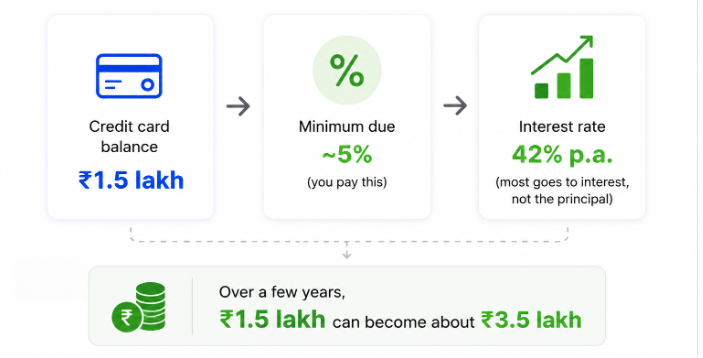
Every statement offers you a tempting escape hatch: the “minimum amount due,” usually around 5% of your total balance. Pay that, and the bank leaves you alone for another month. It feels like relief but is actually the trap.
Here’s the math nobody explains at the point of sale. When your interest rate is 42% a year, a large chunk of that minimum payment goes straight to servicing interest, not reducing what you actually borrowed. So, the principal amount aka the balance you could have cleared in months can stretch into years with this scheme, and the total interest you pay exceeds the original amount you spent.
This is exactly how a ₹1.5 lakh credit card balance turns into ₹3.5 lakh over a few years of “minimum payments.” Paying the minimum is not a solution to manage credit card dues. It is simply a way to stay in debt indefinitely while feeling like you’re being responsible. For anyone already stretched thin, it is the most expensive option on this list.
Option 2: Balance Transfer (The Short-Term Fix)
A balance transfer moves your outstanding dues from a high-interest card to a new card or loan offering a low or 0% introductory rate for a fixed window (typically 3 to 6 months). Used correctly, it can buy you breathing room and let you reduce the principal without interest eating into your payments.
However, this option comes with two hard conditions:
- First, you need a good credit score to qualify for a new card or a consolidation loan. Lenders don’t extend cheap credit to borrowers with OD history.
- Second, you need genuine repayment capacity to clear the balance before the promotional period ends. If you can’t, the rate snaps back to the usual 30–45%, often with a processing fee added on top.
Balance transfer is the sensible credit card debt solution for someone who has hit a temporary cash crunch but still has a steady income and a clean record. It is not built for someone who has already missed several payments and is dodging recovery calls.
Option 3: Settlement (The Permanent Fix)
When the first two doors are closed, settlement is the last open path. Credit card settlement is a negotiated agreement where the lender accepts a reduced, final amount to close your account, writing off the rest.
In India, settlement generally takes one of two forms:
- One-Time Settlement (OTS): You pay a single, negotiated lump sum, usually far less than the total outstanding, and the account is closed immediately. Because the lender gets certainty and an instant exit, this route typically secures the maximum possible discount.
- Term Settlement: If you don’t have a lump sum on hand, the reduced amount is restructured into smaller, affordable installments over a fixed period. You still get the discount and the closure just paid in manageable steps rather than all at once.
With the Settlement option, your account is usually tagged “Settled” rather than “Closed” on your CIBIL report, and that remark can stay for up to 7 years. But here is the context most people miss: if you are already missing EMIs, your score is anyway falling. A “Settled” status is healthier than a live “Default” or “Written Off” entry, as it prevents interest from compounding.
Which Option is Right For You?
Paying minimums keeps you stuck. A balance transfer requires a good credit score and repayment capacity. Both of those give surplus income, a clean record, and time on your side.
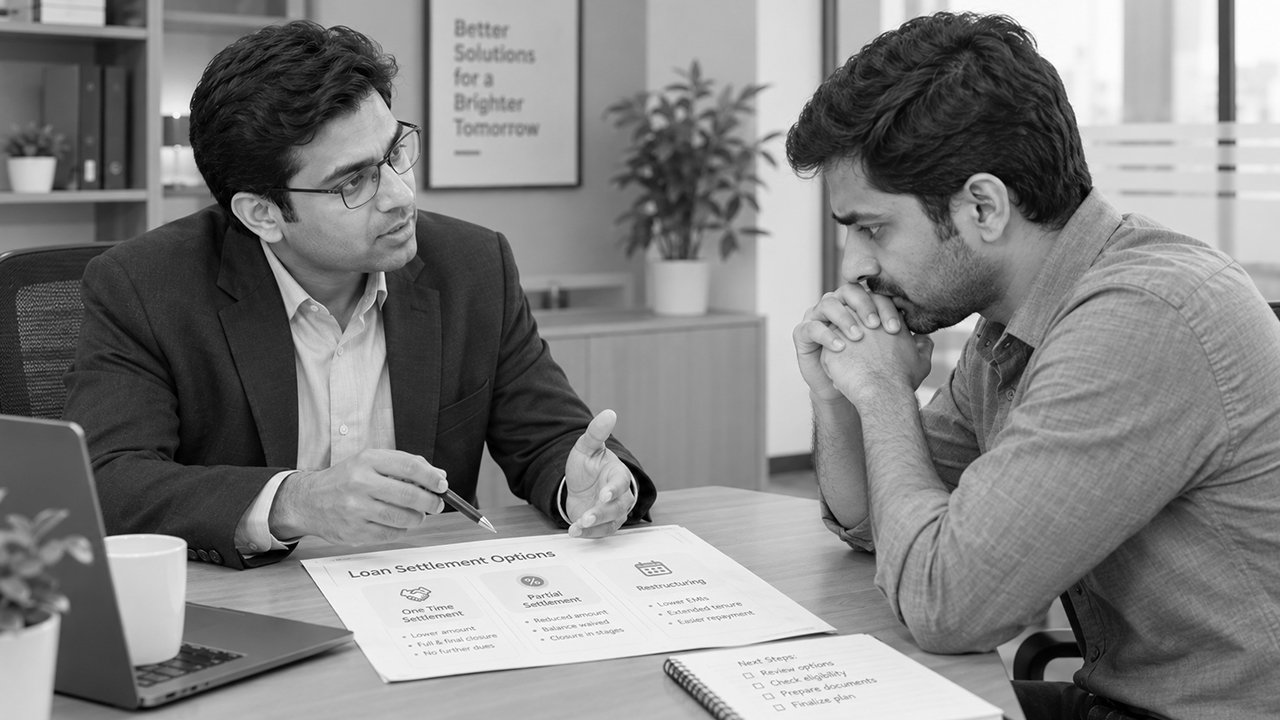
But if you have already missed payments, if recovery agents are calling, if your income has dropped due to a job loss, illness, or a business setback, then options 1 and 2 are simply not for you. If you have neither money nor good credit, settlement is your best and most realistic option. Still confused? Take an expert’s opinion and expertise for your business, such as Settle My Loan.
How Settle My Loan (SML) Helps You Come Out of the Debt Trap?
SML is one of India’s most established loan and credit card settlement specialists. A few things set the approach apart:
- You pay a fee only after your loan is successfully settled, with no upfront or hidden charges. The fee is calculated on the reduced final amount, not the full debt.
- In-house advocates vet every settlement letter to confirm it states “Full and Final” or “Closed,” so the matter cannot resurface later.
- Anti-harassment support shields you from illegal recovery pressure, in line with the RBI’s 2026 fair-practice guidelines that restrict agent calls to 8 AM–7 PM. They also bar agents from contacting your family or shaming you publicly. Paralegal team attends the recovery calls on your behalf.
- Our consultants introduce you to credit-clearance options, where eligible, push the lender to update your report to reflect a “NIL” balance and even improve the overall score.
These are practical debt-free options for real situations, not theory.
Settle My Loan offers a free consultation to map out your options. Reach out at +91 86554 48389 or email info@settlemyloan.in, and take the first real step back toward financial freedom.